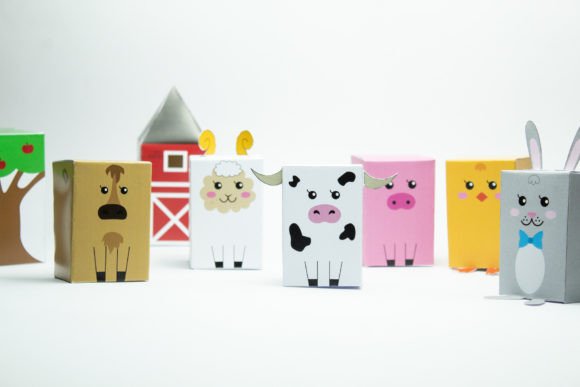
Farm Paper Boxes Toy Set: A Designer Review
As a designer who spends countless hours evaluating digital assets for real-world application, I approach every new file with a mix of excitement and skepticism. The market is flooded with templates that look great on a screen but fail when translated into thread or physical craft. When I first encountered the Farm Paper Boxes Toy Set, my initial thought was about its potential as a 3D SVG project rather than a traditional machine embroidery design. However, the versatility of modern crafting means we often blur the lines between paper engineering and textile art. This review explores how this specific template translates from a digital download to a tangible, high-quality finished product.
First Impressions: Mood and Visual Personality
The Farm Paper Boxes Toy Set immediately evokes a sense of nostalgia and playful simplicity. The visual personality is distinct; it relies on clean lines and recognizable farm motifs that resonate well with parents, nursery decorators, and boutique shop owners. Unlike complex vector art that can get lost in translation, this set maintains a charming aesthetic that feels handmade even before any work begins. For an Etsy seller or small business owner looking to expand their catalog with seasonal or themed items, this design offers a strong foundation. It does not scream for attention with excessive detail but instead invites interaction through its 3D structure.
When considering how this would function as an embroidery project, the shapes suggest a perfect candidate for applique designs or raised satin stitch work. The layout is logical, making it easier to plan thread paths if you were to adapt these forms into fabric patches. The mood is warm and inviting, ideal for baby embroidery projects or holiday gifts where the tactile experience matters as much as the visual appeal.
Real-World Application: From Screen to Stitch
Let's imagine a practical scenario: I am preparing a custom embroidered tote bag for a local craft fair. The client wants a unique, interactive element that stands out among standard flat prints. While the Farm Paper Boxes Toy Set is primarily a 3D SVG template for paper crafts, the concepts within it can be brilliantly adapted for textile use. Imagine creating a series of embroidered patches based on the box shapes, perhaps featuring a tractor or barn silhouette, and attaching them to a canvas tote. The result is a handmade product that feels dimensional and engaging.
For those focusing on custom apparel, such as sweatshirt embroidery or baby clothes, the geometric nature of the boxes allows for creative placement. You could use the design to create a "pop-up" effect on a pillow cover using layered fabrics and dense fill stitches. In a commercial embroidery context, this type of asset works exceptionally well for boutique branding. If you are a small shop product creator, offering a line of personalized gifts based on this theme could attract customers looking for unique nursery decor or educational toys made from fabric.
The key to success here lies in understanding the transition from a digital embroidery file concept to physical reality. If you are using the included PDF instructions to create the actual paper toy, the precision required mirrors that of high-end stitching. Every fold and cut must be accurate. Similarly, if adapting the motif for a tote bag design, the stitch density must be managed carefully to prevent puckering, especially on thicker materials like denim or heavy cotton canvas.
Navigating Challenges: Where Caution is Needed
While the Farm Paper Boxes Toy Set is versatile, there are specific situations where caution is required. If you attempt to translate the intricate corners of the box templates into a machine embroidery design without simplifying the vectors, you risk thread breaks and poor definition. Small hoop sizes may struggle to capture the full scope of the 3D elements, leading to fragmented results. Always check your hoop size compatibility before committing to a large run of products.
Textured fabrics and stretchy materials present another challenge. On knit fabrics, the structural integrity of the design might be compromised if the stabilizer choice is incorrect. Thin fabric can easily distort under the tension of a dense fill stitch, particularly if you are trying to mimic the rigidity of the paper boxes. Dark fabrics also require careful planning regarding thread colors; light-colored designs may need a backing layer or a different stitch technique to ensure visibility and contrast.
Furthermore, curved surfaces like caps or hats can warp the geometry of the box shapes. The straight lines essential to the 3D SVG concept might appear distorted on a rounded surface. For products that need frequent washing, such as kitchen towels or aprons, the durability of the running stitch or satin stitch used to outline these shapes must be tested. High-density areas should be avoided on items that will undergo heavy wear to maintain the professional look of the finished product.
Enhancing Value and Professionalism
Using the Farm Paper Boxes Toy Set effectively can significantly boost the perceived value of your offerings. A well-executed adaptation of this design signals attention to detail and creativity, which builds customer trust. For an Etsy seller, having a cohesive collection of items—whether they are printable mockups, physical toys, or embroidered goods—creates a stronger brand identity. The design assets provided allow for consistency across different product types, ensuring that your commercial embroidery and paper crafts share a unified aesthetic.
Visual appeal is paramount. When a customer sees a personalized gift that looks crisp and well-thought-out, their engagement increases. Whether it is a holiday embroidery project or a bespoke baby item, the clarity of the design contributes to the overall presentation. By taking the time to test the design on scrap fabric first, you ensure that the final output meets your high standards. This step is crucial for maintaining professionalism and avoiding costly mistakes on client orders.
Practical Notes for Designers and Makers
Before integrating the Farm Paper Boxes Toy Set into your workflow, consider these practical steps:
- Test on Scrap Fabric: Always run a test stitch on a similar material to your final product to check for puckering or alignment issues.
- Check Thread Contrast: Ensure your chosen thread colors stand out against the background fabric, especially for detailed corners.
- Review Stitch Density: Adjust settings to prevent over-stitching, which can stiffen the fabric unnecessarily.
- Confirm Hoop Size: Verify that your machine can accommodate the largest dimensions of the design without distortion.
- Inspect Small Details: Zoom in on the embroidery file to ensure tiny elements will stitch cleanly.
- Use Proper Stabilizer: Select a stabilizer appropriate for the fabric weight to support the structure of the design.
- Verify Licensing: Since this is listed under Freebies, double-check the license terms before selling finished items or digital products commercially.
- Compare Backgrounds: Test the design on both light and dark fabrics to see how it adapts to different environments.
The inclusion of SVG, PDF, and PNG formats adds significant value, allowing for flexibility in how you utilize the Farm Paper Boxes Toy Set. Whether you are creating a physical paper toy using the detailed instructions or adapting the shapes for a craft business focused on textiles, the versatility is clear. By approaching this asset with a critical eye and a focus on practical execution, you can create memorable, high-quality products that resonate with your audience. This is not just a template; it is a starting point for innovative design that bridges the gap between digital creativity and tactile craftsmanship.